
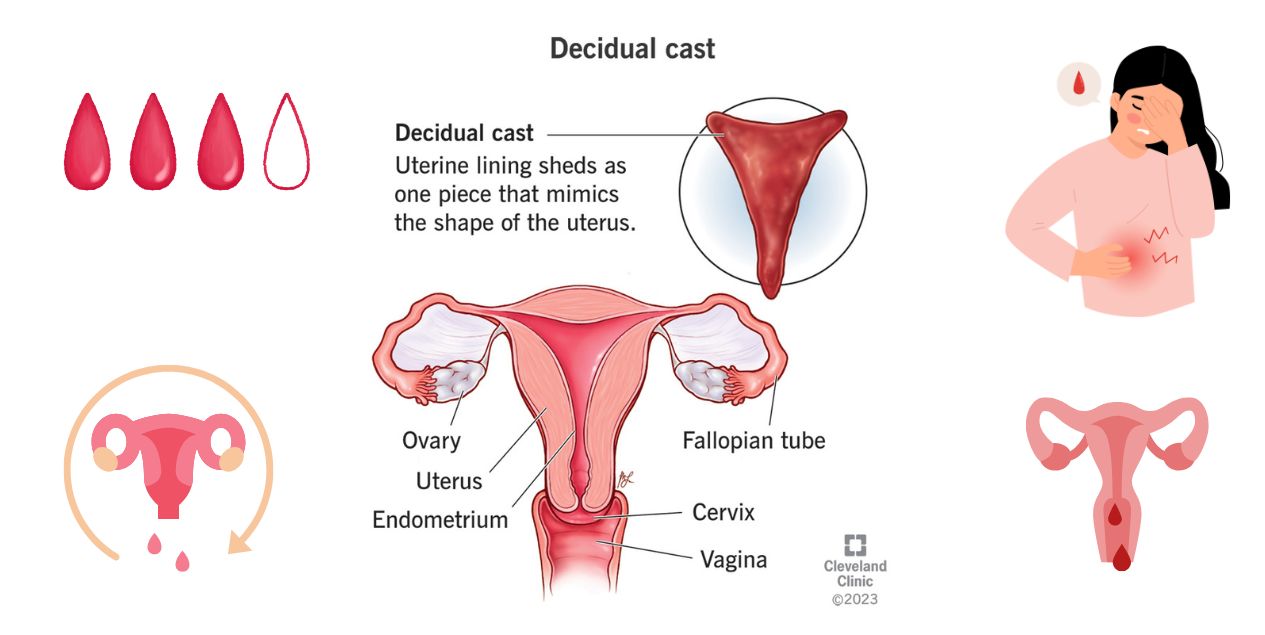
A decidual cast is one of the most startling things a person can experience.
Imagine you are having a particularly heavy period with intense, labor-like cramping. Suddenly, you pass a large, fleshy, triangular piece of tissue that looks exactly like the inside of your uterus. For many, the first instinct is absolute terror—did I just miscarry? Did I just lose an organ? This is called a decidual cast.
While it looks alarming, it is a known biological phenomenon.
What is a Decidual Cast?
A decidual cast is when your uterine lining sheds in one large piece, as compared to drips and drops like your menstrual period.
Usually, your uterine lining (the endometrium) breaks down and sheds in small, bloody pieces over the course of several days. However, in a decidual cast, the entire lining sloughs off as a single piece.
Because the lining is shed whole, the tissue often retains the triangular shape of the uterine cavity, resembling a “mold” or “cast” of your internal anatomy. It is typically fleshy, pinkish-gray, or red.
The medical term for a decidual cast is membranous dysmenorrhea.
Why Does It Happen?
The primary culprit is usually a sudden, dramatic shift in Progesterone. However, healthcare providers aren’t entirely sure what causes it.
Progesterone is the “glue” that keeps the uterine lining thick and attached. If those levels drop too sharply, or if the lining has become particularly thick due to a specific hormonal event, the structural integrity of the lining fails all at once.
Your healthcare provider will evaluate your symptoms and medical history to see if they could explain passing a decidual cast.
Common Triggers in 2026:
Hormonal Contraceptives: Specifically, progestin-only methods like the “Minipill,” the Depo-Provera shot, or Nexplanon implants.
Ectopic Pregnancy: This is a vital lead to follow; sometimes the body creates a thick lining for a pregnancy that is actually located in the fallopian tube.
Puberty: Younger people are statistically more likely to experience a cast as their cycles begin to regulate.
Is a decidual cast bad?
The short answer is no, it is not inherently “bad” or dangerous, but the experience can be very physically taxing. However, you should let your healthcare provider know, especially if you’re bleeding heavily or pregnant. Passing tissue from your vagina could be a sign of ectopic pregnancy. If you aren’t pregnant and don’t have any significant symptoms, it’s typically OK to pass a cast.
How common is a decidual cast?
Decidual casts are rare, and the exact number is unknown. It’s most common in pregnant women who experience ectopic pregnancy. An ectopic pregnancy is when a pregnancy occurs outside of your uterus. Decidual casts can happen in people who aren’t pregnant, usually due to progesterone contraceptives.
Is a decidual cast a Miscarriage?
No, a decidual cast isn’t a miscarriage. However, they share similar symptoms, such as:
- Cramping.
- Pelvic and abdominal pain.
- Bleeding.
- Passing large pieces of tissue out of your vagina.
How do you know if it’s a decidual cast?
Your healthcare provider can determine if the tissue was a decidual cast. To make a diagnosis, your provider may:
- Ask about your medical history and any medications you take, including birth control.
- Discuss your symptoms and when they began.
- Order a pregnancy test.
- Perform a pelvic exam and physical exam.
- Order imaging tests like a pelvic ultrasound.
If you pass a decidual cast at home, take a picture of it to show your provider or bring it with you to your appointment. Sometimes, your provider can make a diagnosis based on your symptoms and by seeing a picture of the tissue.
Can a decidual cast cause infertility?
No. Having a decidual cast hasn’t been known to cause infertility.
Passing a decidual cast is rare, and it typically happens to a person just once. While painful, passing a decidual cast doesn’t usually lead to long-term complications. If you think you passed a decidual cast, you should discuss your symptoms with your healthcare provider. They may want to rule out any serious conditions and determine if there’s a cause.
The human body is capable of startling things, and a decidual cast is high on that list. But remember: your body isn’t “broken.” It simply performed an aggressive version of its monthly cycle. By understanding the powerful biology behind it, you can move from fear to informed health management.